VIP Peptides · Research Compound
NAD+ Research Profile
NAD+ (oxidized nicotinamide adenine dinucleotide) is a coenzyme found
in living cells. It participates in cellular energy metabolism and
several processes involved in DNA repair and gene regulation. NAD+ is
not a peptide.
Not a peptide
Redox process research
Product-label quantity
Not for consumption
Product Information
About NAD+
NAD+ is the oxidized form of nicotinamide adenine dinucleotide, a
coenzyme involved in cellular redox reactions. It acts as an
electron carrier in pathways that contribute to energy production.
NAD+ is also used by enzymes including sirtuins and PARPs, which
participate in gene regulation, cellular stress responses and DNA
repair. These biological roles do not establish that an NAD+
product will produce a particular health outcome.
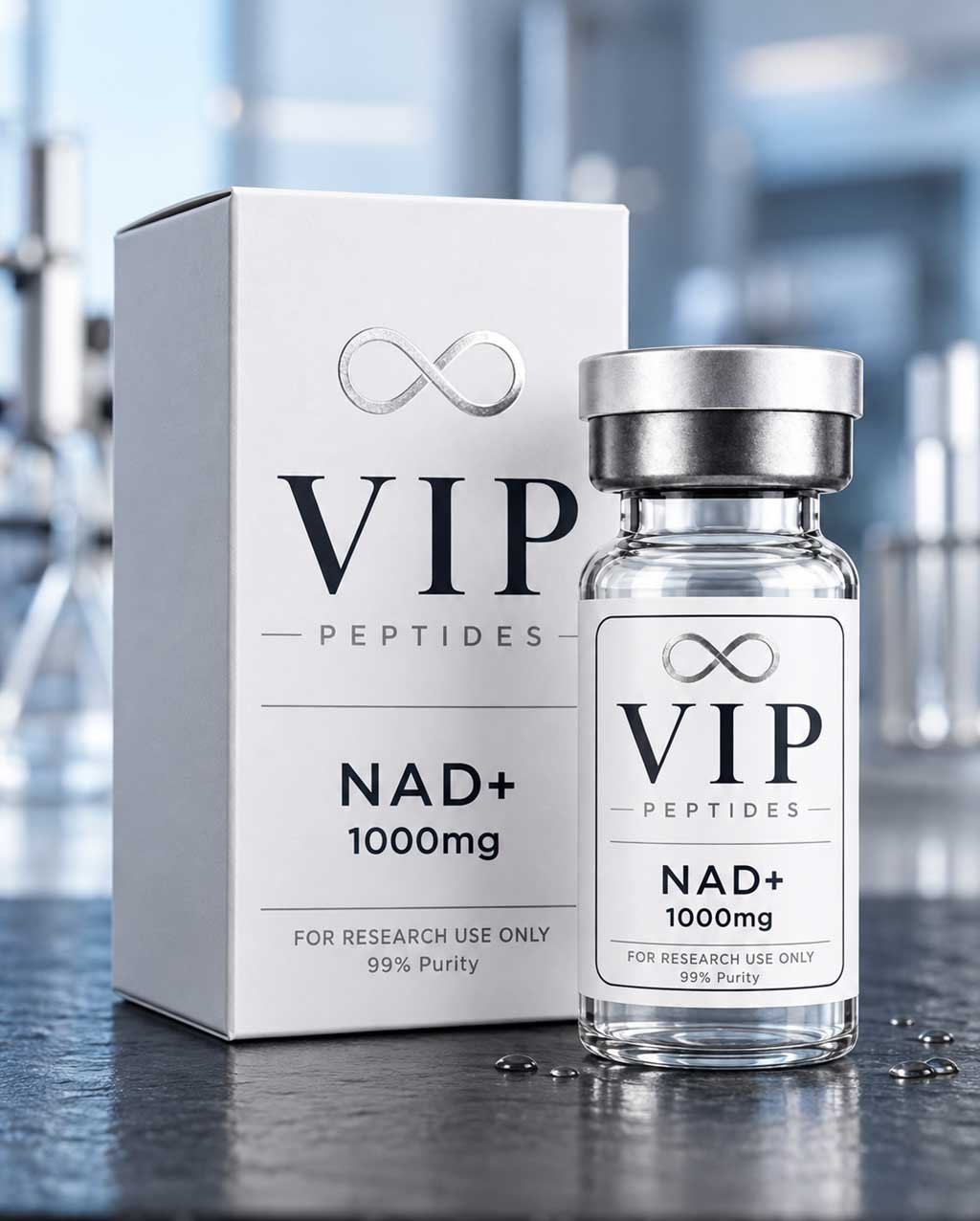
This profile covers the 1,000 mg product version. Confirm product
form and quantity against the supplier’s label.
Product Information
| Product | NAD+ |
|---|---|
| Full name | Nicotinamide adenine dinucleotide |
| Form | Oxidized form |
| Product quantity | 1,000 mg, as stated on product label |
| Compound type | Coenzyme; not a peptide |
| Research focus | Cellular metabolism and redox pathways |
| Use classification | Research use only |
Research Areas
What Research Has Examined
Energy & Redox Metabolism
NAD+ participates in redox reactions and metabolic pathways that
help cells produce energy. Mechanistic and preclinical findings do
not confirm that injectable NAD+ improves energy or performance in
people.
Sirtuins & Cellular Enzymes
NAD+ serves as a substrate for sirtuins and PARP enzymes, which are
studied for their roles in cellular regulation and DNA repair.
Research on these pathways does not establish anti-aging or
therapeutic effects from an injectable product.
Injected NAD+ Evidence
Human evidence for direct NAD+ injection is limited, particularly
for subcutaneous protocols. Studies of oral precursors such as
NMN or NR examine different compounds and cannot be treated as
proof for injectable NAD+.
Evidence Overview
What the Evidence Can Establish
Mechanistic and preclinical research describes NAD+’s roles in
cellular metabolism, mitochondrial processes and enzyme activity.
Direct human evidence for injected NAD+ is more limited than research
on oral NAD+ precursors.
Human research on intravenous administration does not establish the
safety or effectiveness of subcutaneous use. Benefits claimed for
energy, cognition or healthy aging have not been confirmed by large
controlled trials of subcutaneous NAD+.
Safety & Regulatory Status
Important Product Limitations
Reported effects during parenteral administration include flushing,
warmth or tingling, nausea and headache. Subcutaneous administration
may also cause injection-site reactions. Reactions can vary by person
and product.
NAD+ is naturally present in the body, but that does not mean an
injectable preparation is approved or risk-free. Injectable NAD+
products are not FDA-approved for anti-aging, energy enhancement or
general wellness uses. Compounded preparations are not FDA-approved
by the FDA before marketing.
FDA has reported adverse events following use of NAD+ injectable
drugs, including severe chills, shaking, vomiting and fatigue. The
agency said these reactions were consistent with excessive endotoxin
levels, underscoring the importance of appropriate ingredient quality
and sterile-product controls.
consumption, clinical use, diagnosis, treatment, cure, mitigation or
prevention of disease.

![NAD+ (oxidized nicotinamide adenine dinucleotide) [1000mg]](https://vipresearchpeptides.com/wp-content/uploads/2026/10/nad.jpg)
![GLP3R [30mg]](https://vipresearchpeptides.com/wp-content/uploads/2026/10/glp-300x300.jpg)
![Cagrilintide [10mg]](https://vipresearchpeptides.com/wp-content/uploads/2026/10/cagrilitinde-300x300.jpg)

![KPV (Lysine-Proline-Valine) [10mg]](https://vipresearchpeptides.com/wp-content/uploads/2026/10/kpv-300x300.jpg)
Reviews
There are no reviews yet.