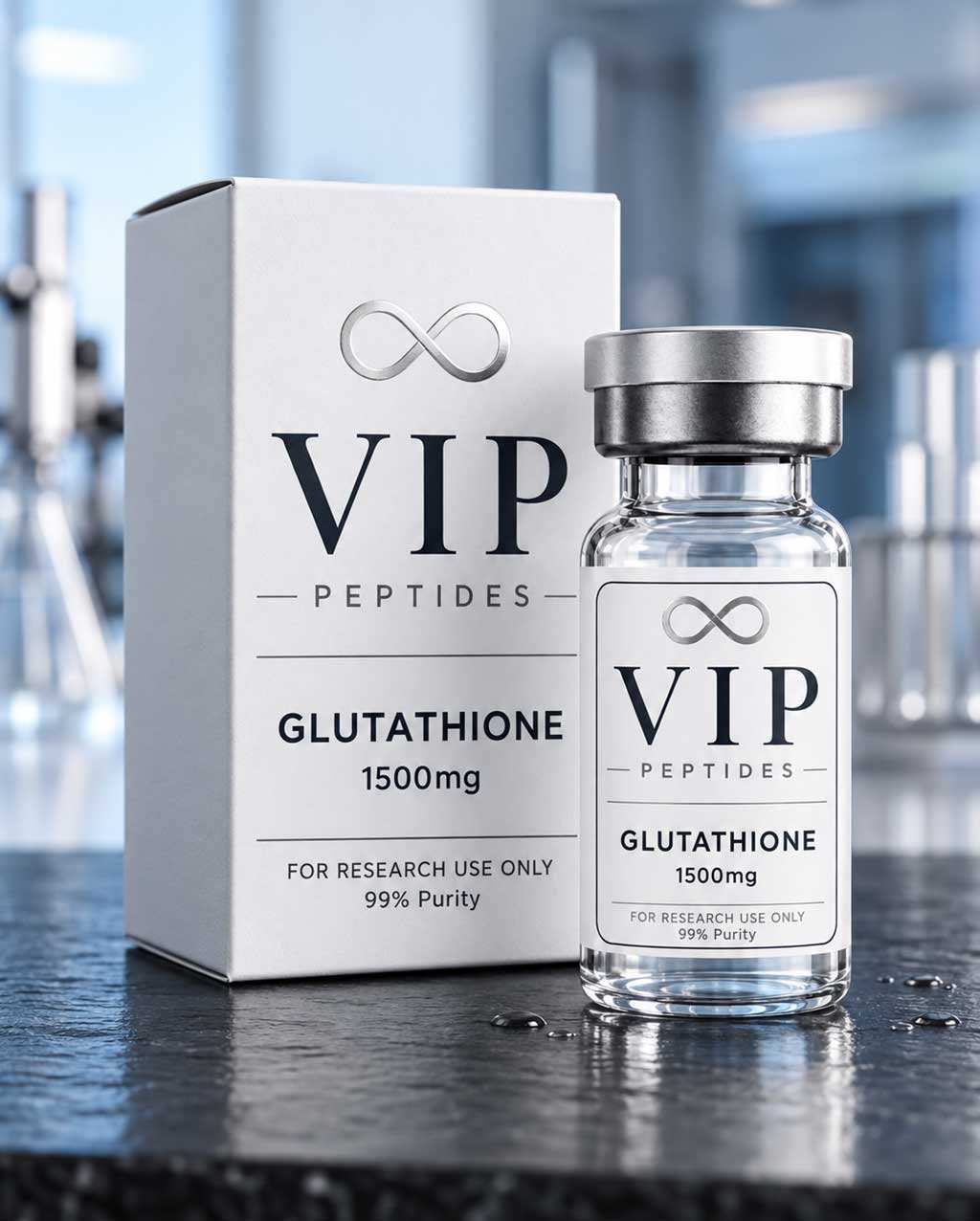
Glutathione is a naturally occurring tripeptide involved in cellular antioxidant and redox pathways. Evidence for subcutaneous research use is limited. Research use only; not for human or veterinary consumption.
⚗RESEARCH USE ONLY
Laboratory research
▤BATCH DOCUMENTATION
Not currently available
◈PRODUCT FORMAT
10 mg · Lyophilized powder
For laboratory research only. Not for human or animal consumption.
Glutathione is a naturally occurring tripeptide made from glutamate,
cysteine and glycine. This profile covers the 1,500 mg product version;
evidence specific to subcutaneous use is limited.
3 Amino Acids Glutamate, cysteine and glycine
Cellular Antioxidant Redox pathway research
1,500 mg Product-label quantity
Research Use Only Not for consumption
Product Information
About Glutathione
Glutathione is a tripeptide composed of glutamate, cysteine and
glycine. It is found inside cells and is studied for its role in
antioxidant defense, cellular redox balance and enzyme-supported
detoxification pathways.
Glutathione is also studied in relation to mitochondrial and immune
function. These biological roles do not establish that a particular
product or route provides a clinical benefit.
This page describes the 1,500 mg version. Confirm the product form
and quantity against the supplier’s label.
Product Information
Product
Glutathione
Composition
Glutamate, cysteine and glycine
Peptide length
3 amino acids
Product quantity
1,500 mg, as stated on product label
Research focus
Antioxidant and cellular redox pathways
Evidence note
Subcutaneous-specific evidence is limited
Use classification
Research use only
Research Areas
What Research Has Examined
Antioxidant & Redox Pathways
Glutathione is studied in cellular antioxidant defense and redox
balance. Results from one formulation or route do not confirm
benefits for another.
Detoxification Research
Researchers examine glutathione’s role in enzyme-supported
detoxification pathways, including pathways associated with the
liver. This does not establish a treatment or “detox” effect from
this product.
Immune & Wellness Claims
Immune function, recovery, skin health and general wellness have
been explored in different settings. Evidence varies by route;
strong controlled evidence for subcutaneous use and broad wellness
claims is limited.
Evidence Overview
Route and Evidence Limitations
Much of the human research involves oral, liposomal or intravenous
glutathione. These findings cannot automatically be applied to
subcutaneous administration.
Robust clinical trial evidence validating a specific subcutaneous
1,500 mg product or protocol is limited. Claims such as dramatic skin
lightening or broad anti-aging effects are not established by strong
controlled evidence.
Safety & Regulatory Status
Product Quality and Important Limitations
Subcutaneous administration may be associated with injection-site
redness, stinging, swelling or discomfort. Headache, fatigue and mild
gastrointestinal symptoms have also been reported. The risks for a
specific product depend on its formulation and quality.
Injectable glutathione products are not FDA-approved drugs for general
wellness uses. Compounded products are not FDA-approved by FDA before
marketing. Product quality, sterility and endotoxin control are
important considerations for sterile preparations.
FDA has issued safety notices and recalls involving compounded
glutathione injections with potential endotoxin concerns. This does
not establish that every glutathione product is affected; it highlights
the importance of product-specific quality and sterility controls.
For laboratory research only. Not intended for human or animal
consumption, clinical use, diagnosis, treatment, cure, mitigation or
prevention of disease.
Reviews
There are no reviews yet.
Be the first to review “Glutathione [1500mg]” Cancel reply

Reviews
There are no reviews yet.