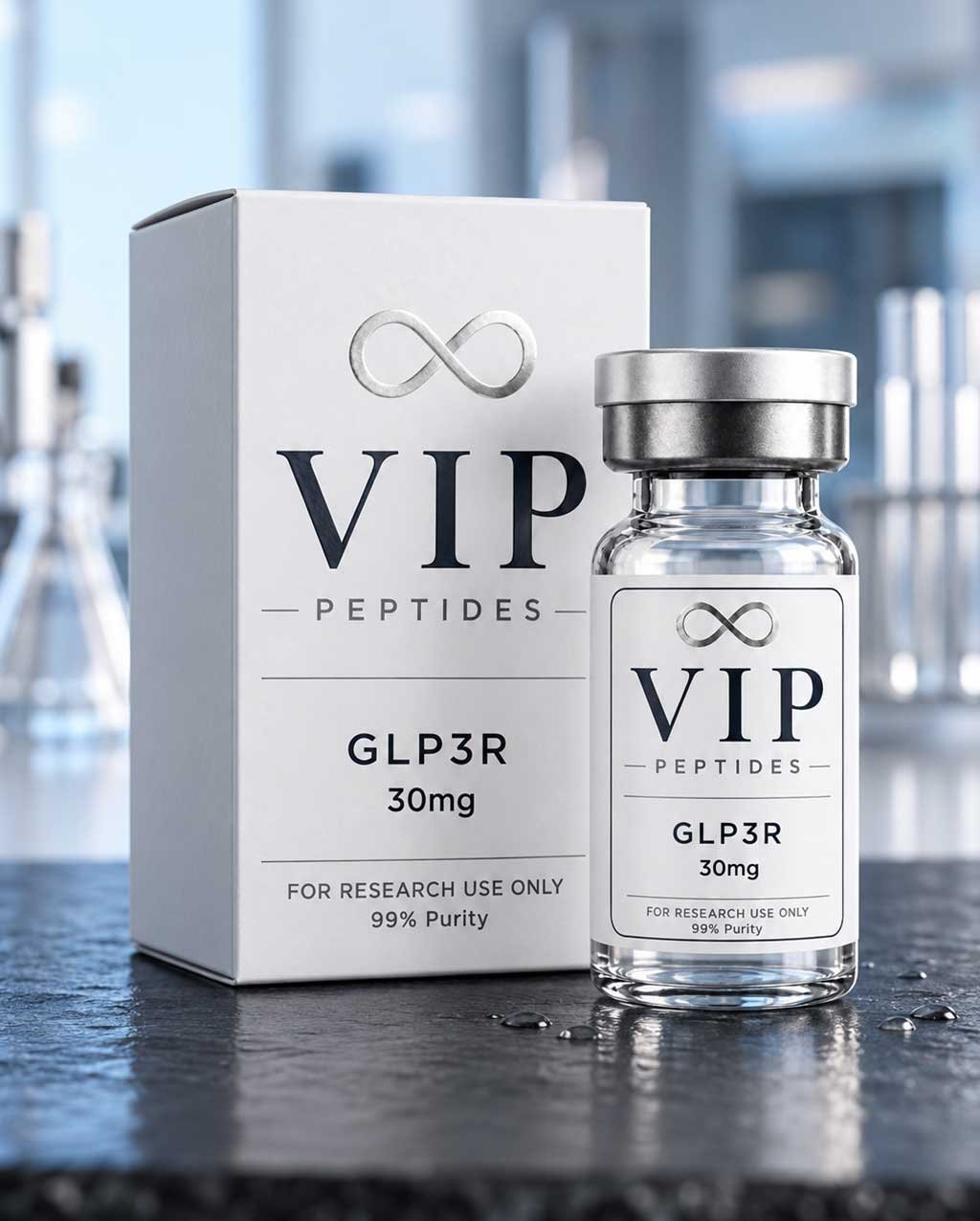
GLP3R · Triple Agonist
GLP3R Triple Action
GLP3R is an investigational triple hormone-receptor agonist that
activates GLP-1, GIP, and glucagon receptors. Its three-pathway approach
is being studied for effects on appetite, glucose regulation, and energy
balance.
GLP-1 Receptor
Appetite, fullness, and glucose regulation
GIP Receptor
Meal-related insulin response
Glucagon Receptor
Energy expenditure and fat metabolism research
Investigational
Not FDA-approved
Three Receptor Targets
Understanding GLP3R
GLP3R is designed to activate the receptors for GLP-1,
glucose-dependent insulinotropic polypeptide (GIP), and glucagon.
The approach builds on research into dual GIP/GLP-1 receptor
agonists, including GLP2T. Earlier research raised questions about
GIP and obesity; subsequent studies examined the effects of combining
GIP and GLP-1 activity in one molecule.
GLP3R adds glucagon-receptor activity to those two pathways. The
combined effects are being studied; the contribution of each
receptor to weight and metabolic outcomes is still under
investigation.
Receptor Overview
| GLP-1 |
Appetite, gastric emptying, and glucose regulation |
| GIP |
Meal-related insulin secretion and metabolic signaling |
| Glucagon |
Energy expenditure and fat-oxidation pathways under study |
| Compound |
GLP3R, an investigational triple agonist |
Receptor Pathways
GLP3R’s Three-Pronged Approach
GLP-1 Receptor Activation
GLP-1 receptor activity can slow gastric emptying, reduce appetite
through brain signaling, increase insulin secretion when blood
glucose is elevated, and support blood-glucose control. This pathway
is a foundation of GLP-1 medicines used in metabolic care.
GIP Receptor Activation
GIP receptor activity can enhance insulin release from the pancreas
in response to meals. Researchers are also studying its potential
role in appetite control, fat storage, energy balance, and glucose
regulation.
GLP2T’s dual GLP-1/GIP activity provided clinical evidence for
studying both pathways together. GLP3R adds a third receptor
target.
Glucagon Receptor Activation
The glucagon-receptor component distinguishes GLP3R from
dual GLP-1/GIP agonists. Researchers are studying its potential
effects on energy expenditure, fat oxidation, satiety signaling,
liver fat, and body composition.
Potential Liver and Satiety Pathways
Proposed mechanisms include glucagon signaling through the vagal
nerve as a possible contributor to fullness, and glucagon-receptor
activity in the liver as a possible influence on FGF21 secretion.
These mechanisms are under investigation and should not be treated
as established clinical outcomes.
Combined Activity
Why Researchers Study All Three Pathways
The triple-agonist approach is intended to engage pathways that may
complement one another:
-
GLP-1 and GIP receptor activity may combine to influence appetite
and glucose regulation.
-
Glucagon-receptor activity is being studied for its potential
effects on metabolic rate and fat oxidation.
-
The combined effect on energy balance may differ from that of a
single- or dual-receptor agonist.
-
Researchers are studying whether multiple pathways affect
adaptation and weight-loss plateaus.
These are research questions and proposed mechanisms; they are not
guaranteed outcomes for an individual.
Phase 2 Research
Reported Weight-Reduction Finding
In a Phase 2 trial in adults with obesity, the 12 mg group had a mean
body-weight reduction of up to 24.2% at 48 weeks. This was a result
from that particular study and dose.
The figure does not establish that GLP3R is more effective than
approved single- or dual-agonist medicines. That would require
appropriate direct comparative evidence.
Evidence & Status
Research Is Still Ongoing
GLP3R remains investigational and is not FDA-approved. Its
potential benefits, risks, and long-term outcomes are still being
evaluated in clinical research.
The 24.2% result came from a Phase 2 study at 48 weeks; it should not be
presented as a guaranteed result or as proof of superiority over other
medicines.
This information is educational and does not provide medical advice.
GLP3R is an investigational compound, not an approved treatment.


Reviews
There are no reviews yet.