Incretin Research
The story began with the broader discovery of incretin hormones in
the 1960s. These hormones were found to stimulate insulin release
in response to food.8

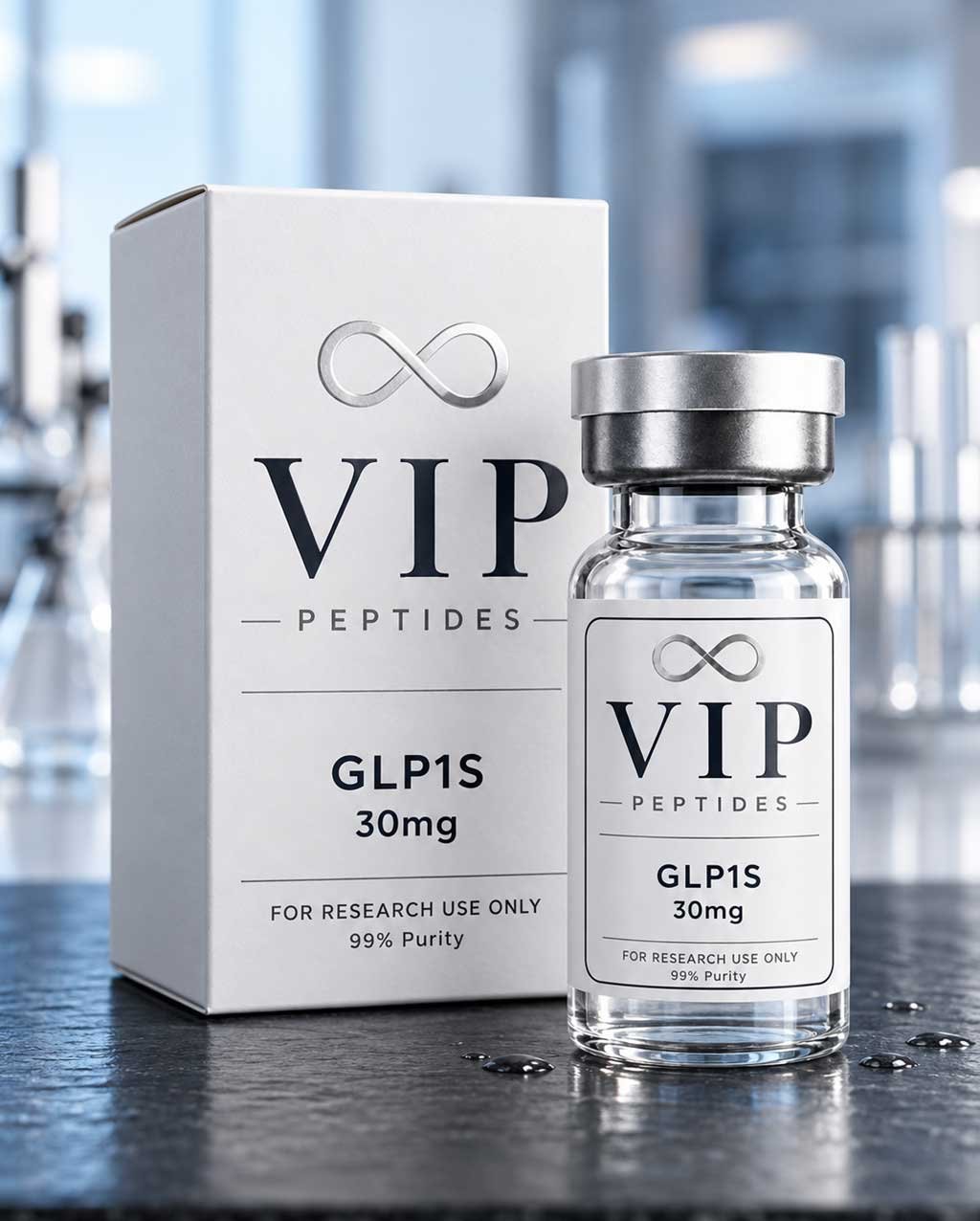
$60.00
An overview of GLP-1, its role in appetite and glucose regulation, and how GLP-1 receptor agonists work.
For laboratory research only. Not for human or animal consumption.
GLP-1 · Metabolic Research
Glucagon-like peptide-1 (GLP-1) is an intestinal hormone involved in
appetite, digestion, and blood-glucose regulation. GLP-1 receptor
agonists are medicines designed to produce effects similar to natural
GLP-1 for longer.
Natural GLP-1
GLP-1 is produced by L-cells in the intestine in response to food
intake, and its levels rise rapidly after eating.3
Natural GLP-1 has a very short half-life—approximately 1–2
minutes—because it is rapidly broken down by the enzyme
dipeptidyl peptidase-4 (DPP-4).4,5
This short duration helped inspire the development of GLP-1 receptor
agonists: medicines that mimic GLP-1 activity while lasting longer
than the natural hormone.

| Insulin secretion |
Enhances insulin release from the pancreas in a glucose-dependent manner, helping lower blood sugar after meals. |
|---|---|
| Glucagon suppression | Reduces glucagon, a hormone that raises blood-glucose levels. |
| Gastric emptying |
Slows movement of food from the stomach to the intestines, which can prolong fullness. |
| Brain effects |
Acts on appetite-related areas in the hypothalamus and brainstem, reducing hunger and increasing fullness. |
| Food preferences |
Research has examined possible reductions in cravings for high-calorie foods and changes in food preferences. |
Development of GLP-1 Medicines
The story began with the broader discovery of incretin hormones in
the 1960s. These hormones were found to stimulate insulin release
in response to food.8
GLP-1 was identified as an important incretin hormone in the 1980s.
In 1987, Svetlana Mojsov, Joel Habener, and colleagues at
Massachusetts General Hospital showed that the truncated form
GLP-1(7–37) is a potent stimulator of insulin release.9
Exenatide (Byetta), the first approved GLP-1 receptor agonist,
appeared in 2005. It was derived from exendin-4, a peptide found in
the saliva of the Gila monster, a venomous lizard native to the
southwestern United States.10
Exenatide’s development helped open the way for further incretin-based
medicines used in diabetes care and, for certain medicines, weight
management.
Weight Management
By activating GLP-1 receptors in appetite-regulating brain areas,
these medicines can reduce hunger and promote earlier fullness.
This may help patients consume fewer calories.6,7
Food moves from the stomach more slowly, which can prolong
fullness and reduce the desire to snack between meals.
Studies have examined whether these medicines reduce cravings for
fatty and sweet foods or influence food preferences.
GLP-1 agonists enhance glucose-dependent insulin secretion and
suppress glucagon. These actions help regulate blood glucose,
alongside their effects on appetite and food intake.
How They Last Longer
Natural GLP-1 is rapidly degraded by DPP-4, giving it a half-life of
about 1–2 minutes.4,5 GLP-1 receptor agonists were developed
to mimic GLP-1 activity while resisting rapid breakdown or otherwise
lasting longer in the body.
Together, effects on appetite, fullness, gastric emptying, and glucose
regulation help explain why GLP-1 agonists are used in weight-management
treatment. They are generally used alongside lifestyle modifications.
Research & Context
GLP-1 is a naturally occurring hormone; GLP-1 receptor agonists are
medicines designed to mimic some of its actions for longer. The effects
and approved uses vary by medicine.
Research into food cravings and preferences is ongoing. These effects
should be understood as areas of study rather than guaranteed outcomes
for every patient.
Age & Policy Confirmation
Please confirm your age and review the policies before entering.

Reviews
There are no reviews yet.