VIP Peptides · Research Compound
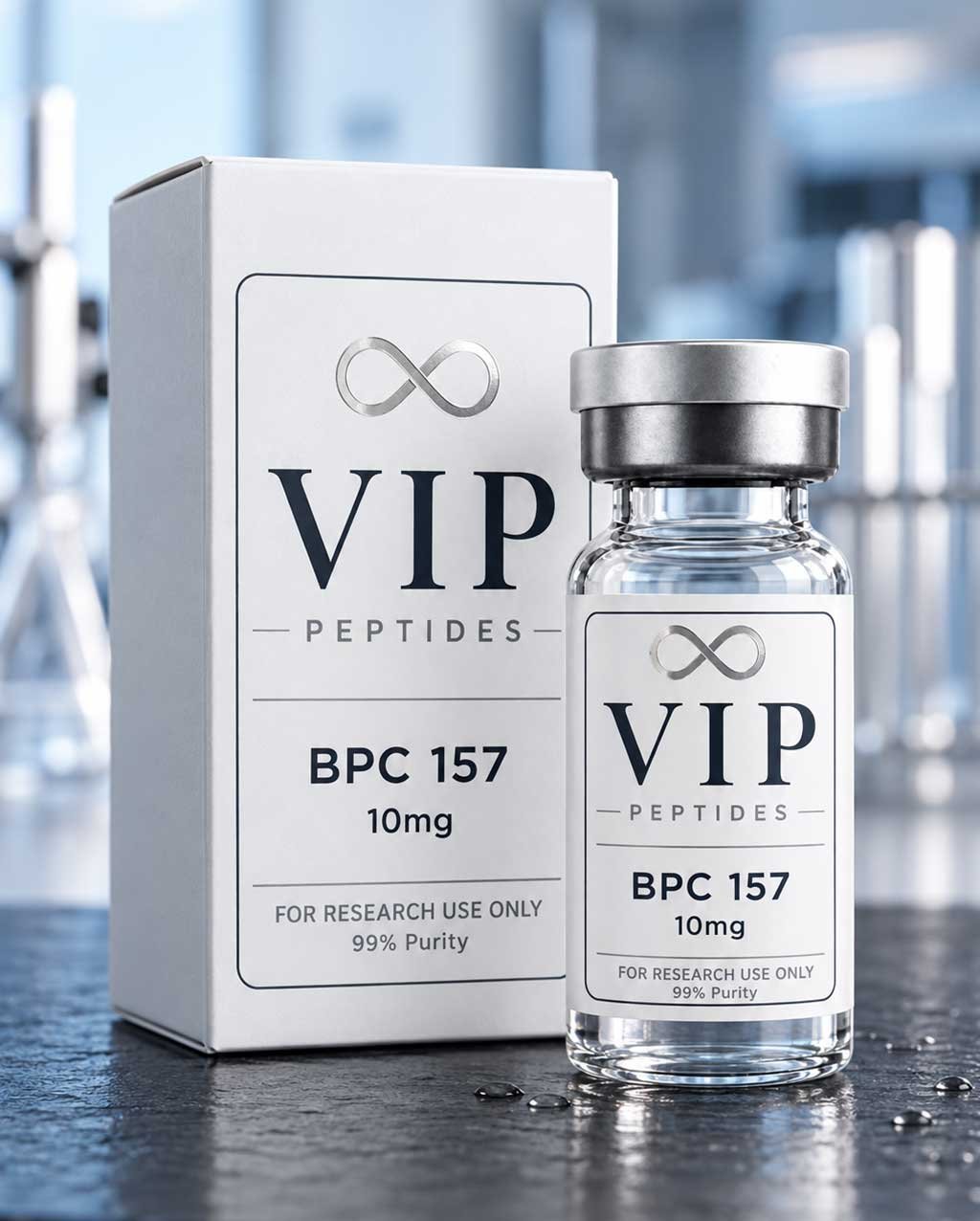
BPC-157 Research Profile
BPC-157 (Body Protection Compound-157) is a synthetic 15-amino-acid
peptide derived from a protective protein found in human gastric juice.
This profile covers the 10 mg research vial and summarizes preclinical
research; it does not establish clinical benefits.
15 Amino Acids
Peptide length
10 mg
Vial quantity
Preclinical
Evidence base
Research Use Only
Use classification
Product Information
About BPC-157
BPC-157 has been studied in laboratory and animal models involving
tendons, ligaments, muscle, the gastrointestinal tract and nerves.
Proposed research mechanisms include angiogenesis, fibroblast
migration, collagen organization, nitric oxide pathways and
growth-factor signaling.
Nearly all efficacy findings are preclinical. They do not establish
that BPC-157 is effective or safe for treating injuries or disease
in people.
Research Overview
| Product |
BPC-157 |
| Also known as |
Body Protection Compound-157 |
| Peptide length |
15 amino acids |
| Vial quantity |
10 mg |
| Research status |
Human evidence remains very limited |
| Regulatory status |
Not FDA-approved for any indication |
Research Areas
What Preclinical Research Has Examined
Tendon, Ligament & Muscle Models
Animal and cell studies have examined healing-related processes,
including blood-vessel formation, fibroblast activity and collagen
organization. These findings do not demonstrate injury treatment
benefits in humans.
Gastrointestinal Models
Preclinical studies have explored protective effects in models of
NSAID-related ulcers, inflammatory bowel lesions and gut-barrier
damage. Human clinical evidence remains limited.
Wound & Tissue Remodeling
Research has investigated wound-healing processes and the
organization of tissue repair, including possible effects on
excessive fibrosis and scar formation.
Nerve & Signaling Pathways
Studies have examined potential effects in brain and peripheral-nerve
injury models, along with nitric oxide and growth-factor signaling,
including pathways related to VEGF.
Evidence Limitations
What the Research Does Not Establish
Large, controlled human trials have not established BPC-157’s efficacy,
appropriate clinical use or long-term safety. Most claims are based
on animal or laboratory findings.
Research findings do not establish that any particular product or
batch has a verified identity, purity or clinical quality. Check
product documentation independently where available.
Safety & Regulatory Status
Important Limitations
BPC-157 is not FDA-approved for any indication. The FDA has cited limited
safety information and concerns involving immunogenicity, peptide-related
impurities and characterization of the active ingredient in compounded
products.
Animal findings do not establish human safety. Theoretical concerns have
also been raised about angiogenesis-related effects in the presence of
active malignancy.
BPC-157 is listed under the WADA Prohibited List’s S0 category for
non-approved substances.
For laboratory research only. Not intended for human or animal
consumption, clinical use, diagnosis, treatment, cure, mitigation or
prevention of disease.

Reviews
There are no reviews yet.